
Flies buzzing around are so annoying! A comprehensive guide to scientifically preventing and eliminating flies to safeguard your family’s food safety. A fly lands on freshly served dishes in the kitchen, a swarm of buzzing “little figures” always gathers near the trash can, and brown fly droppings stain clothes left out to dry… As summer arrives, flies become a major headache for many households. Not only do they compromise food hygiene, but they also carry numerous pathogens that spread diseases, posing significant threats to vulnerable groups like the elderly and children. This guide comprehensively covers the hazards of flies, identification methods, scientific prevention techniques, and common misconceptions—providing a complete “Fly Prevention and Extermination Manual” to help you effortlessly safeguard your family’s food safety.
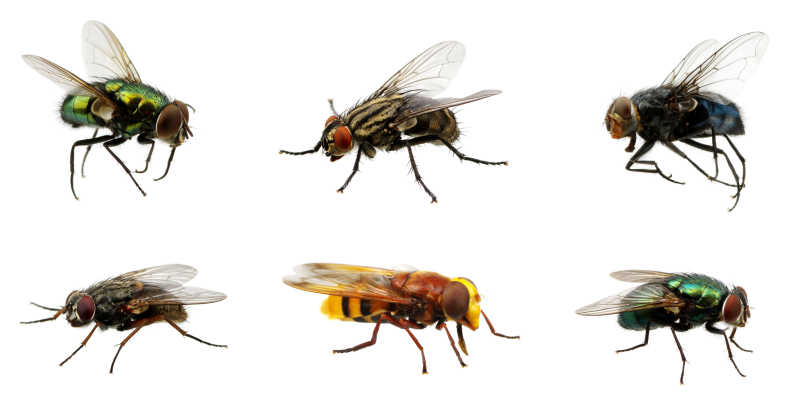
When people think of flies, most only associate them with being noisy and dirty. Few realize their harm extends far beyond mere annoyance. As common disease-carrying insects, flies’ lifestyle makes them carriers of pathogens, posing multiple threats to human health.
1. Disease Transmission: Flies Are “Mobile Reservoirs of Pathogens”
Flies constantly inhabit filthy environments like trash bins, toilets, sewage ditches, and rotting food. They carry hundreds of types of bacteria, viruses, and parasite eggs, transmitting diseases through contact, excrement, saliva, and other means:
① Gastrointestinal Diseases: The most common illnesses spread by flies include cholera, typhoid fever, dysentery, and bacterial food poisoning. When flies land on food, they first regurgitate saliva containing digestive enzymes (to dissolve food for easier consumption) while simultaneously excreting waste, directly contaminating food with pathogens. Consumption of contaminated food can cause vomiting, diarrhea, abdominal pain, and in severe cases, dehydration or shock.
② Respiratory and Skin Diseases: Fly excrement, molted skin fragments, and body hairs disperse into the air during flight. When inhaled, they may trigger respiratory allergies like asthma and rhinitis. Contact with broken skin can also cause infectious diseases such as folliculitis and dermatitis.
③ Parasitic Infections: Flies carry eggs of parasites like roundworms and tapeworms. These eggs can enter the human body through contaminated food or hand contact, causing parasitic infections. Children infected may experience malnutrition, abdominal pain, and other issues.
Statistics indicate that a single fly can carry over 1 million bacteria, including pathogens like E. coli and Staphylococcus aureus. The World Health Organization classifies flies as a “priority vector insect for control.”
2. Food and Environmental Contamination: Compromising Food Safety and Quality of Life
Flies contaminate food in multiple ways:
① Direct Contamination: Flies landing on meals, fruits, or snacks deposit saliva, excrement, and pathogens. Even if chased away, the food remains contaminated and unsafe for consumption. Accidental ingestion may cause gastrointestinal discomfort.
② Indirect contamination: Flies moving through kitchens, dining areas, and storage rooms spread pathogens onto utensils, cookware, table surfaces, and even laundry. For instance, inadequately cleaned dishes touched by flies may cause cross-infection among family members.
Additionally, the buzzing sound flies make while flying can disturb rest. Their excrement and carcasses can also contaminate walls and furniture, affecting the cleanliness of the home environment and causing numerous inconveniences in daily life.
Flies have a wide range of activity and reproduce rapidly (a single female fly can lay 500-1000 eggs in her lifetime, with eggs hatching into adults in just 7-10 days). If not detected promptly, they can easily become a major infestation. The following 4 signs can help you quickly determine if your home has a fly problem:
1. Adult fly sightings: “Frequent daytime fly activity”
Flies are most active during daylight hours, particularly in well-lit areas with food sources (like kitchens, dining rooms, or balconies). If you frequently spot flies during the day, or notice them resting near food or trash bins, it indicates active fly presence in your home—prompt action is needed.
2. Eggs and Larvae: “Spotting small white particles or maggots in decaying matter”
Fly eggs appear white and oval-shaped, commonly laid in rotting food, trash bin contents, or pet feces. Visually, they resemble “tiny white specks”; After hatching, eggs develop into maggots (larvae)—milky white, cylindrical worms that wriggle within decaying matter. Discovering these signs while cleaning trash cans or handling spoiled food indicates flies have bred within your home environment, requiring immediate and thorough cleaning.
3. Excrement and Traces: “Brown spots on walls, furniture, or clothing”
Fly excrement appears brown or black, typically in dot-like or streaky patterns. It commonly appears on surfaces where flies frequently land, such as walls, cabinet doors, table edges, and hanging laundry. If you find these spots, wiping them with a paper towel leaves a stain and an unpleasant odor, indicating flies have been active for some time. Focused cleaning of these areas is essential.
4. Odor attraction: “Rancid smells from trash cans or kitchen corners”
Flies are highly sensitive to putrid odors. If household trash bins aren’t emptied promptly, food scraps linger in kitchen corners, or rotten fruits/vegetables go unnoticed, they emit foul smells that lure flies indoors. If you frequently detect such odors alongside fly activity, immediately identify the source and thoroughly clean it.
The core of fly control is “prevention before extermination”—first blocking fly entry through environmental modifications and physical barriers, then implementing safe and effective extermination measures for existing flies to prevent recurrence.
1. Preventing Flies: Cut Off “Invasion Routes” and “Survival Conditions” at the Source
(1) Environmental Cleanliness: Make it “Impossible for Flies to Find Food or Breed”
Flies depend on food and filthy environments to survive, making household cleanliness crucial for prevention:
① Prompt Garbage Disposal: Use covered trash bins. Empty them twice daily—morning and evening—to prevent overnight accumulation. Seal garbage bags tightly before disposing of them in designated outdoor bins. Avoid stacking bins near entrances or balconies to deter flies. Position kitchen trash bins away from stoves and dining tables to prevent food contamination.
② Thoroughly clean food residues: Immediately wash dishes after meals using dish soap, then air-dry them. Wipe down kitchen counters, dining tables, and floors, paying special attention to removing food particles (like bread crumbs or rice grains) from crevices. Store refrigerated items in sealed containers. Discard expired or spoiled food promptly to prevent odors that attract flies.
③ Minimize standing water and decaying matter: Promptly remove standing water from balconies and bathrooms to prevent mosquito breeding (flies also linger in damp environments). Sort fruits and vegetables promptly after purchase; immediately cut away or discard rotten parts and avoid leaving them at room temperature for extended periods. Clean up pet feces daily, avoiding leaving it indoors or on balconies.
(2) Physical Barriers: Prevent Flies from “Entering Indoors”
① Install protective screens: Fit all windows (especially kitchen and dining room windows) with screens. Choose metal mesh with a high mesh count (18 mesh or higher). Prevent screen damage (repair holes with tape or replace screens if damaged). For open kitchen/dining room doors, install screen doors or magnetic soft door curtains to allow ventilation while blocking flies. If doors are frequently open for ventilation, hang “fly-repellent ribbons” at doorways (using color and scent to deter flies) for additional protection.
② Avoid “actively attracting” flies: When drying clothes outdoors, if flies are abundant, hang them on an indoor balcony (with screens) instead. When cooking and needing ventilation, turn on the range hood to use airflow to reduce fly entry. After purchasing food, promptly remove outer packaging to prevent bringing in external fly eggs.
2. Fly Extermination: Choose Safe Methods to Avoid Health Risks
If flies are already present in your home, select appropriate extermination methods based on the situation. Pay special attention to households with elderly individuals, children, pregnant women, or pets, prioritizing safe, non-irritating approaches.
(1) Physical Extermination: Safe with No Residue, Suitable for Home Use
① Fly Swatter: The most common physical tool. Choose models with larger swatting surfaces and longer handles for reaching high or cornered flies. Usage tips: Wipe the swatter with paper towels after use, wrap the fly carcass, and dispose of it in the trash to prevent bacterial contamination. Avoid swatting near food or utensils to prevent contamination from fly fragments.
② Fly Paper / Fly Traps: Select fly traps with attractants. Place them in high-traffic fly areas like kitchen corners, near trash cans, or on windowsills. Usage precautions: Keep out of reach of children and pets (e.g., avoid placing on floors or low countertops) to prevent accidental ingestion or hair entanglement. If the board becomes heavily covered with flies, seal and dispose of it promptly; do not discard it indoors.
③ Fly Trap Cages: Ideal for homes with heavy fly infestations or outdoor use (balconies, gardens). These traps lure flies inside using attractants, trapping them permanently. Position cages away from food sources. Regularly remove trapped flies and replenish attractants (use sugar water or rotten fruit as natural alternatives; avoid chemical attractants).
(2) Chemical Extermination: Highly effective and fast-acting, but requires strict safety precautions.
If physical extermination methods prove ineffective, chemical agents may be used, but only low-toxicity, safe products should be selected and applied according to regulations:
① Select appropriate agents: Prioritize fly-specific sprays or aerosols containing “permethrin,” “pyrethrin,” or “fipronil.” These ingredients exhibit low toxicity to humans while demonstrating strong fly-killing efficacy. Avoid highly toxic pesticides like “DDVP” or “DDD” to prevent poisoning.
② Correct application method: When using sprays, close all doors and windows. Apply the agent evenly to areas where flies frequently land, such as walls, windowsills, the outside of cabinets, and around trash cans. Do not spray directly on food, tableware, or kitchen utensils. After spraying, evacuate the room with all occupants and pets. Keep doors and windows closed for 30 minutes, then ventilate for 2-3 hours until the odor dissipates before re-entering. If spray contacts skin or clothing, rinse immediately with water.
③ Targeted Area Treatment: Exercise extra caution when spraying in kitchens and dining areas. Secure food and tableware first, then spray floor surfaces and wall crevices. If pets are present, thoroughly clean their activity zones after spraying to prevent contact with residual chemicals.
(3) Natural Fly Repellents: Suitable for Sensitive Individuals, Supplementary Protection
For households with elderly, children, or pets, natural fly repellents offer a safer alternative though less potent than chemical agents:
① Scent-based repellents: Flies dislike the odors of mint, mugwort, lemon, and cloves. Place potted plants (e.g., mint plants, mugwort bundles) containing these herbs in kitchens or dining areas. Alternatively, apply a few drops of lemon or clove essential oil to cotton balls and position them on windowsills or in cabinet corners for supplemental repellency.
② Sugar water traps: Prepare a small bowl with sugar water (or honey water) and add a few drops of dish soap (to disrupt flies’ flight ability). Place it in areas where flies are active. Flies attracted to the sweet liquid will land in the bowl, become stuck by the soap, and be unable to escape. Simply replace the sugar water periodically.
Many people try various methods to prevent and exterminate flies, but some practices not only fail to solve the problem but may also endanger their own and their family’s health. Here are 4 common misconceptions:
1. Misconception 1: “After swatting a fly with a fly swatter, cleaning it up directly with your hands”
Many people wipe away dead flies with their hands or dispose of them directly after swatting. This is dangerous: Fly carcasses carry significant bacteria. If your hands have cuts, bacteria can enter through the wounds and cause infections. Even without cuts, bacteria can spread to food or utensils through hand contact.
Correct practice: After swatting a fly, wrap the carcass in a tissue and dispose of it in a sealed trash can. After handling, wash hands thoroughly with soap and running water. If exposed to fly excrement, use an alcohol-based hand sanitizer to disinfect.
2. Misconception 2: “The more insecticide sprayed, the better the fly control.”
Some believe “more insecticide spray means faster fly elimination,” leading to excessive application—even near food. Overuse can cause toxic gas buildup indoors, causing symptoms like dizziness, nausea, and breathing difficulties upon inhalation. Long-term exposure may damage the nervous and respiratory systems. If sprayed on food, accidental ingestion can cause poisoning.
Correct Approach: Strictly follow the dosage instructions on the product label to avoid overuse. Keep spraying away from food, tableware, and children’s toys; store these items safely if necessary. Ensure thorough ventilation after spraying and wait until the odor dissipates before re-entering the room.
3. Misconception 3: “Focusing only on killing adult flies while ignoring eggs and larvae”
Many people concentrate solely on eliminating flying adult flies, overlooking eggs and larvae hidden in the environment. However, fly eggs and larvae continuously hatch into adults. Without proper cleanup, even after killing the adults, new flies will emerge within days, leading to recurring infestations.
Correct Approach: While eliminating adult flies, thoroughly clean areas where eggs and larvae may exist—such as trash cans, kitchen corners, and rotting food. Wash trash cans and garbage bags with hot water (over 60°C/140°F), and use a vacuum cleaner to clean floor crevices, destroying the environment where eggs and larvae survive.
4. Misconception Four: “Fly prevention isn’t needed after summer”
Many believe “flies only appear in summer, so prevention isn’t needed in fall and winter.” However, flies remain active and reproduce as long as indoor temperatures stay between 15-30°C. In warmer regions, flies can survive indoors during winter with heating or air conditioning. Even before temperatures drop in autumn, flies increasingly enter homes to store energy by seeking food, maintaining their nuisance level.
Correct approach: Maintain year-round fly prevention based on local climate conditions, especially during warm periods in autumn and winter. Do not relax environmental cleaning and physical barriers.
Different environments and fly activity patterns require tailored prevention methods. Here are three common scenarios:
1. Home Fly Prevention: Focus on the “Kitchen” and “Dining Area”
In homes, kitchens and dining areas are prime fly gathering spots requiring focused protection:
① Kitchen: Install window screens and screen doors to prevent flies from entering when windows are open. Empty trash bins daily, rinse with hot water, and allow to air dry. Store cabinet foods (like flour, grains, snacks) in sealed containers to avoid attracting flies. Thoroughly clean kitchen floors and wall crevices weekly with dish soap to remove food residue.
② Dining Room: Keep screens closed if windows are open during meals. Clear tables immediately after eating, sealing leftovers in the refrigerator. Avoid placing trash bins near dining tables to prevent flies from circling food. If the dining area has a pendant light, hang sticky fly paper near the light source (flies are attracted to light) to aid in elimination.
③ Other Areas: When drying clothes on the balcony, install a screen door if outdoor flies are prevalent. Keep bathrooms dry and promptly remove standing water to deter flies. Replace fruit in living room bowls regularly and discard rotten fruit immediately.
2. Fly Prevention for Commercial Establishments: Special Attention for “Food Service Businesses”
Food service establishments, supermarkets, fruit shops, and similar businesses attract flies due to abundant food sources and require enhanced protection:
① Food Service Businesses: Install screens on windows and doors in preparation areas and dining zones, or use air curtains (installed at entrances to block flies with airflow); Store ingredients and utensils in sealed containers to prevent exposure. Use foot-operated, covered trash bins and empty them every 2 hours. Conduct regular disinfection of kitchens and dining areas; consider hiring professional pest control services.
② Supermarkets / Fruit Stores: Install dust/fly covers over food sections (especially bulk items) to prevent fly contact. Sort fruit daily in produce sections and promptly remove and dispose of rotten fruit. Clean floors and shelves daily to remove fallen food debris; place sticky fly traps or hang fly-repellent ribbons at entrances to reduce fly entry.
3. Outdoor Fly Prevention: Picnics and Camping
During outdoor activities (e.g., picnics, camping), flies tend to swarm around food. Take the following precautions:
① Choose suitable locations: Avoid picnicking near trash bins, drainage ditches, or dense vegetation; opt for open, well-ventilated areas. When camping, set up tents away from unclean environments and keep tent doors closed.
② Food Protection: Seal outdoor food in airtight containers or bags, opening only when ready to eat to minimize exposure. Immediately clean up food scraps after meals, seal trash bags, and remove them—never leave waste outdoors. Carry portable fly-catching paper to place near food for additional deterrence.
③ Personal Protection: During outdoor activities with heavy fly presence, wear light-colored clothing (flies are more attracted to dark colors) and avoid strongly scented perfumes or skincare products (which may attract flies). Carry mosquito repellent containing menthol, as it also helps deter flies.
Though common, flies can be effectively managed by adopting scientific methods, maintaining consistent environmental cleanliness, and implementing physical barriers. Remember: Fly prevention and extermination is not a “one-time task,” but a long-term habit requiring persistence. Daily garbage disposal, regular environmental cleaning, and prompt repair of window screens—these details collectively help keep flies at bay.If your home has a significant fly infestation or if self-treatment proves ineffective, consider contacting a professional pest control company. They can develop a customized plan tailored to your household to eliminate flies completely. After all, only a fly-free environment ensures your family can eat with peace of mind and live comfortably, safeguarding your household’s food safety and health.



 French
  English
  Arabic
  Spanish
  Russian
  German
  Portuguese
  Italian