
Wild boars invade farmlands, orchards, and villages, not only devouring crops such as corn, rice, vegetables, and fruit trees—causing severe economic losses—but also damaging irrigation facilities and fences, and even threatening the personal safety of villagers. They have become a major concern for many farmers in mountainous and semi-mountainous areas.
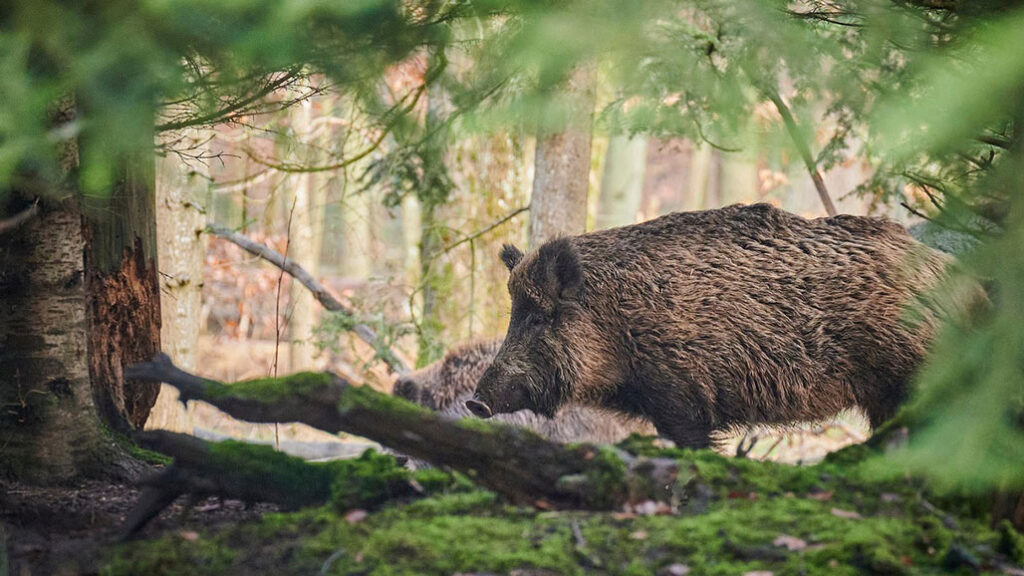
To effectively deter wild boars, one must first understand their habits and vulnerabilities, avoid common pitfalls, and implement targeted measures to prevent wasted effort.
Wild boars are omnivorous, gregarious animals with extremely keen senses of smell and hearing, though their vision is relatively poor. They are naturally timid but become highly aggressive when protecting their young or when startled; They prefer sweet crops such as corn, sweet potatoes, potatoes, and melons, typically coming down from the mountains at night or in the early morning to forage. They tend to follow fixed routes, are highly vigilant, and are extremely sensitive to unfamiliar odors, sudden noises, and bright lights. Additionally, wild boars are skilled at digging and rooting, making it easy for them to destroy ordinary low fences. They have strong reproductive capabilities, and their populations spread rapidly.
Summary of Core Weaknesses: Fear of pungent odors, sudden loud noises, flashing bright lights, the scent of unfamiliar predators, and sturdy physical barriers. Based on these weaknesses, our deterrence strategy centers on “odor repellents, acoustic deterrents, light interference, physical barriers, and regulatory compliance,” ensuring a safe and risk-free process throughout.
For small areas such as the outskirts of villages, private vegetable gardens, and small courtyards, emergency repellency can be achieved using everyday items without significant investment. This approach is suitable for short-term protection and initial prevention, and is simple enough for the elderly and children to operate.
1. Odor Repellency Method: Use pungent odors to make wild boars actively stay away
Wild boars have a sense of smell several times stronger than humans and are extremely sensitive to strong, irritating odors. Scattering or hanging items with strong odors around farmlands and vegetable gardens creates a natural odor barrier that prevents wild boars from approaching.
Common materials: chili powder, black pepper powder, Sichuan pepper powder, garlic juice, kerosene, diesel, menthol oil, camphor balls; a mixture of well-rotted farm manure and wood ash can also be used. Practical methods: Mix chili powder and black pepper powder with water in a 1:5 ratio, fill a spray bottle, and spray around crop plants, field ridges, and courtyard walls; Wrap camphor balls and menthol oil in gauze and hang one every 5–10 meters; soak old cloth strips in kerosene or diesel, tie them to wooden sticks, and insert them around the perimeter of the fields. Replace them regularly to maintain the intensity of the scent. Note: Avoid spraying directly on edible parts of crops to prevent affecting their taste; the scent will dissipate after rain, so timely re-spraying or replacement is necessary.
2. Acoustic Deterrence Method: Sudden Noise to Disrupt Wild Boars’ Sense of Security While Foraging
Wild boars are extremely vigilant when foraging at night; sudden, piercing noises will startle them into fleeing instantly, making this method suitable for unattended nighttime use.
Simple Implementation: Hang wind chimes, empty soda cans, or tin buckets around the perimeter of the field to produce noise when the wind blows; Install simple trigger-activated bells that ring when wild boars touch the ropes along the field edges; if conditions permit, install solar-powered voice bird repellents, switch to high-frequency noise mode, or schedule the playback of firecracker sounds, dog barks, or human voices every 1–2 hours to prevent wild boars from getting used to a single sound. Note: Do not play the same sound continuously for long periods, as wild boars will gradually adapt and the deterrent effect will be lost. It is recommended to change the audio regularly.
3. Bright Light Deterrence Method: Use intense light at night to keep wild boars from approaching
Wild boars are nocturnal and extremely sensitive to bright light, especially flashing lights, which can disorient them and deter them from approaching.
Practical Implementation: Install solar-powered strobe lights or solar warning lights, placing one every 10 meters. These lights turn on automatically at night; alternating red and blue flashing provides the best results. Alternatively, use old flashlights mounted on wooden poles and aimed toward the outer edges of the fields for continuous nighttime illumination. Place reflective mirrors and reflective strips around the perimeter of the fields to reflect moonlight and starlight, creating visual interference.
4. Manual + Livestock-Assisted Repellence
During the peak foraging seasons in spring and autumn, farmers can patrol in groups at night, using flashlights, banging on basins, and setting off firecrackers (within legal limits) to actively drive away the wild boars; Domestic dogs and geese have a natural deterrent effect on wild boars. Geese have shrill calls and are quite aggressive, capable of providing immediate early warning and driving away wild boars, making them suitable for protecting the peripheries of village courtyards.
For large-scale cultivation areas such as cornfields, rice paddies, orchards, and tea plantations, simple methods have limited effectiveness. A combination of professional repellent equipment and physical barriers is required to achieve comprehensive protection, reduce crop losses, and ensure long-term, large-scale effectiveness.
1. Professional Repellent Devices: Smart Prevention and Control, Unattended Operation for Peace of Mind
Currently, the market offers smart repellent devices specifically designed for wild boars. Combining multiple functions such as sound, intense light, ultrasound, and scent, these devices provide long-lasting repellent effects without the need for frequent manual operation, offering excellent value for money.
Mainstream Devices: Solar-powered ultrasonic wild boar repellers utilize high-frequency ultrasound to stimulate the auditory system of wild boars. They are harmless to humans and livestock, have an effective radius of 50–100 meters, are easy to install, and offer long battery life; Infrared-sensor animal repeller: Automatically triggers when wild boars approach, emitting intense light, loud noises, and predator sounds for precise deterrence; Biological repellent: A professional agricultural formula with long-lasting scent that withstands rain. Sprayed along field edges and around crops as directed, it is environmentally friendly and does not contaminate soil or crops.
2. Planting Buffer Zones: Natural Ecological Barriers for Dual Protection
Plant crops that wild boars dislike—such as thorny or pungent varieties—along the boundary between farmland and forests to create a natural buffer zone. This not only prevents wild boars from entering but also generates additional income.
Recommended Species: Prickly shrubs such as Sichuan pepper, Chinese jujube, locust, and buckthorn, or pungent crops like garlic, onions, ginger, and castor beans. The buffer zone should be 2–3 meters wide, planted in contiguous strips to form a dense barrier that wild boars find difficult to cross. This also serves as a buffer to slow down the rate of wild boar incursions.
3. Optimizing Field Management: Reducing Incentives for Wild Boar Foraging
Many wild boars come down from the mountains because of food temptations around farmlands. Optimizing field management can reduce the likelihood of wild boar appearances at the source. Harvest mature crops promptly; do not discard fruits or straw carelessly to avoid attracting wild boars with leftover food; clear weeds and shrubs around field ridges to eliminate hiding and resting spots for wild boars; avoid piling grain or feed in the fields to cut off the wild boars’ food sources.
In areas where wild boar damage is severe and sightings are frequent, simple deterrents and specialized equipment can only serve as supplementary measures. Erecting a sturdy physical barrier is the most effective and reliable long-term solution, fundamentally preventing wild boars from entering farmlands and courtyards. The National Forestry and Grassland Administration also strongly promotes such compliant protective facilities.
1. Standardized Fencing: Sturdy, Durable, and Resistant to Digging and Burrowing
Ordinary wire mesh and bamboo fences are easily breached by wild boars digging or burrowing through them. It is recommended to use high-strength galvanized wire mesh or cattle fencing with mesh openings no larger than 10 centimeters. The fence should be at least 1.5 meters high, with the bottom buried 30–40 centimeters underground to prevent wild boars from digging tunnels; Install a reinforcement post every 2–3 meters to tighten the wire mesh and ensure the fence is stable, preventing adult wild boars from ramming and destroying it.
2. Electric Pulse Fences: Compliant, Efficient, and Highly Deterrent
Pulse electric fences are currently the most effective physical barrier for wild boar control and are classified as compliant protective equipment recommended by the government. They use low-voltage pulsed currents to stimulate wild boars, causing only temporary discomfort without harming the boars or other wildlife, nor endangering the safety of humans or livestock.
Installation Requirements: Installation must be performed by professionals. Set up 2–3 rows of wires: the bottom row 20 cm above the ground, the middle row 80 cm, and the top row 150 cm, tailored to the size of wild boars. Place prominent warning signs around the perimeter to prevent accidental contact by people or livestock. Suitable for large-scale farmland, forestry areas, and breeding facilities, a single installation can last 5–10 years, with a deterrence rate exceeding 90%.
3. Isolation Trench + Earthen Embankment: Low-Cost, High-Impact Barrier
Farmers with limited budgets can dig a separation trench at the boundary between forests and farmland. The trench should be 1 meter wide and 1.2 meters deep, with an earthen embankment built on the inner side. Due to their bulky size, wild boars cannot cross the deep trench nor dig through the embankment, effectively preventing them from entering farmland. This method is suitable for areas with gentle terrain.
Although wild boars are generally timid, they can become extremely aggressive when startled or when protecting their young. If you encounter a wild boar while working in the fields or patrolling at night, do not panic, chase, or provoke the animal. Keep the following safety guidelines in mind:
1. Stay calm and back away slowly, maintaining a safe distance of at least 10 meters from the wild boar. Do not turn and run, as this may trigger the boar’s instinct to chase;
2. Do not make direct eye contact with the wild boar or make sharp noises. Slowly retreat to a safe area and take immediate cover behind a wall, vehicle, or large tree;
3. If attacked by a wild boar, use nearby sticks or farming tools to defend yourself, focusing on protecting vital areas such as the head and chest. Call for help and contact the police immediately;
4. Never approach wild boar piglets. Mother boars are extremely aggressive when protecting their young. If you spot piglets, move away immediately and do not touch or pick them up.
– Misconception 1: Using the same sound or scent for extended periods. Wild boars quickly adapt, rendering the method ineffective. It is recommended to periodically change deterrent methods and combine multiple approaches;
– Misconception 2: Erecting low, flimsy fences. Wild boars can easily root through or climb over them, making the effort futile. Fences must be deeply buried and reinforced;
– Misconception 3: Ignoring the damage caused by wild boars and assuming deterrence is useless. In reality, early prevention and timely deterrence can significantly reduce losses later on.
There is no single, universal method for deterring wild boars. To thoroughly resolve this issue, one must adhere to the principles of “prevention first, combined deterrence, physical barriers, and compliant disposal,” and select an appropriate solution based on specific circumstances: Use simple, low-cost deterrent methods for small vegetable gardens; employ professional equipment combined with ecological buffer zones for large farmlands; install standardized fencing or electric pulse fences in areas with severe damage; and apply for professional, compliant population control when wild boar density is excessively high.
At the same time, farmers should collaborate on prevention and control. By installing protective facilities and conducting deterrence efforts uniformly across contiguous farmlands, a comprehensive prevention and control network can be formed, yielding better results; Maintain proper field management on a daily basis to reduce food sources, implement early warning systems, and take proactive deterrence measures. This approach not only safeguards crop yields but also ensures personal safety.
If your farmland or property is currently being plagued by wild boars, consider following the methods outlined in this article. Start with simple deterrence measures and gradually upgrade to long-term protection to completely eliminate wild boar damage, allowing you to farm with peace of mind and live without worry.



 Portuguese
  English
  Arabic
  Spanish
  Russian
  German
  French
  Italian